

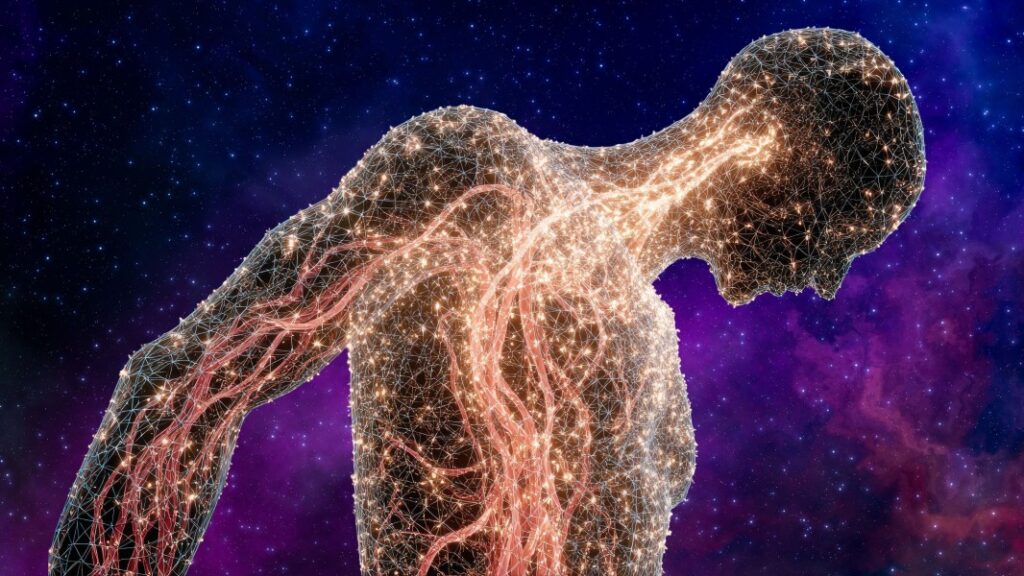
(how food, sleep, and movement become gateways to awareness)
This is Part 2 of this series, read the part 1 first if you have missed it.
We often treat the body like a reluctant assistant—something to push, fix, or occasionally reward. But in Sri Aurobindo’s view, the body is not a dumb instrument; it’s a conscious partner in our evolution.
If the soul is the flame within, the body is its temple.
Everything else—clarity, peace, even spiritual growth—rests on this foundation.
In this article 13 sections
- The Forgotten Instrument
- The Physical Nature Has Its Own Laws
- The Three Pillars of Physical Well-being
- Food — The Conscious Intake of Energy
- Sleep — The Art of Repose
- Exercise — The Discipline of Movement
- 4. Listening to the Body’s Wisdom
- The Physical and the Psychic
- The Working Professional’s Trap
- Practice: A One-Week Reset
- The Beginning of Mastery
- Reflection
- 🔔 Next
The Forgotten Instrument
Modern life keeps us in our heads. We think about deadlines, messages, goals—but forget to inhabit the one thing that anchors us to reality: the physical body.
Sri Aurobindo described it as the material sheath, the outermost layer through which the soul expresses itself. It carries its own consciousness—slow, steady and rhythmic like breath and heartbeat. When we ignore it, it rebels with fatigue, tension, or disease. When we respect it, it becomes a vessel of peace and endurance.
The Physical Nature Has Its Own Laws
The body learns not by thought but by habit, rhythm, and repetition. It thrives on order—consistent sleep, wholesome food, steady movement. Yet most of us live as if we can override its laws indefinitely.
We fuel it irregularly, deprive it of rest, and then expect serenity and focus. But spiritual progress cannot bypass biology. Its steadiness is the ground on which the higher movements can safely descend and unfold.
The Three Pillars of Physical Well-being
Sri Aurobindo often emphasized that transformation is not ascetic denial but harmonious regulation. Three pillars uphold that harmony: food, sleep, and exercise. They are not moral disciplines—they are acts of conscious collaboration.
Food — The Conscious Intake of Energy
Food carries not only nutrients but vibrations. When we eat mechanically, the body digests confusion; when we eat with awareness, it absorbs harmony.
Integral practice invites us to eat with quiet attention—neither indulgence nor rejection. Ask before eating: “Does this truly nourish or merely stimulate?” Gratitude before meals aligns the physical and the subtle. Conscious gratitude is the transforming principle. Over time, the body itself begins to choose what sustains its balance.
For working professionals, conscious eating can mean pausing before a meal, breathing once deeply, and letting the senses settle. You’ll find digestion, energy, and even emotional steadiness change.
Sleep — The Art of Repose
Sleep is not a waste of time; it is the body’s rejuvenation. During rest, the physical sheath repairs itself, while deeper parts of the being digest the day’s experiences.
Too little sleep dulls the mind and agitates the vital; too much breeds inertia. The key is regularity—same hours, same rhythm. Enter sleep consciously: offering the body to the higher consciousness before drifting off. Then even rest becomes yoga.
In our culture of hustle, reclaiming sleep is a spiritual act. It tells the body: “I trust you; I will listen to your rhythm.”
Exercise — The Discipline of Movement
Movement is the body’s language of joy. When we exercise consciously— playing, walking, stretching —we awaken the cells to light and rhythm.
The goal is not performance or competition but presence.
Sri Aurobindo valued physical culture as part of integral education because it refines endurance, balance, and plasticity. A body that moves with awareness supports a mind that thinks clearly and a vital that feels harmoniously.
Even ten conscious minutes of stretching before work can shift one’s entire energy for the day.
It is a way to make the body more receptive, plastic, and luminous—a help to the soul’s work.
4. Listening to the Body’s Wisdom
The more we pay attention, the more we discover that the body communicates—through lightness, tension, hunger, or fatigue. Ignoring it is like muting a wise elder.
The trick is neither indulgence nor control but conversation:
- Fatigue might mean “too much mental strain.”
- Restlessness might signal “unused vital energy.”
- A craving might hint at “emotional depletion.”
As we learn to listen without judgment, the body begins to cooperate instead of resist. With patience and openness, allow the psychic influence to harmonize.
The Physical and the Psychic
Why does this matter for inner growth? Because the body is the meeting point between matter and spirit. The psychic being—the soul within—needs a stable, receptive instrument through which its influence can act.
When the body is agitated or exhausted, the psychic voice is harder to hear. When the body is calm and balanced, its rhythm becomes transparent to that inner light. Then even simple actions—walking, cooking, breathing—become expressions of the soul.
The body’s receptivity depends on psychic awakening; it is not merely a gate but a servant to the soul. When the psychic prevails, the physical becomes plastic—not the other way around.
This is what Sri Aurobindo meant by making the body conscious — a gradual awakening of consciousness in the body.
The Working Professional’s Trap
Most professionals treat the body as a machine to optimize, not as a consciousness to awaken. Caffeine replaces rest; screens replace silence; adrenaline replaces vitality. The result: disconnection and burnout.
Integral practice reverses this logic. It asks: “What if awareness itself is the best productivity tool?” A centred body supports emotional stability and creative insight far better than constant strain.
True productivity comes when the body’s rhythm is respected, and energy flows in harmony with inner guidance, rather than forced to meet external targets.
Practice: A One-Week Reset
Try this for seven days:
- Eat consciously – no distractions, just you and your meal.
- Sleep on time – same hour, with a moment of gratitude before bed.
- Move daily – stretch, play, walk, or practice asanas with awareness.
- Journal each evening: “How did my body feel today?”
You may notice subtle changes—clearer mind, steadier mood, lighter presence. That’s the body responding to consciousness.
The Beginning of Mastery
Sri Aurobindo wrote that true mastery begins when the physical no longer imposes its inertia but obeys the higher will naturally. That happens slowly, through respect and perseverance.
Work in the body is slow, meticulous, and asks for patient adjustment to its rhythm, not violent imposition by the vital demands or mental ideas.
The body is slower than the mind and vital; give it time, encouragement, and do not harass it with demands it cannot meet.
When food, sleep, and movement become conscious, the body ceases to drag the being downward. It starts to rise with it—becoming a collaborator in transformation.
Reflection
Tonight, before bed, ask yourself:
“Have I lived in my body today—or merely through it?”
Your answer will tell you how integrated your consciousness really is.
To see how your physical nature relates to your emotional and mental parts, explore the Parts of Being Profiler— a reflective tool inspired by Sri Aurobindo’s integral psychology.
👉 Try it here: https://purnam.co/pob
🔔 Next
“The Lower Vital — Desires, Habits, and the Energy of Enjoyment.” We’ll explore how our impulses and cravings can become fuel for growth instead of sources of conflict.
Did this help you?


Share a reflection