

What Is True Development?
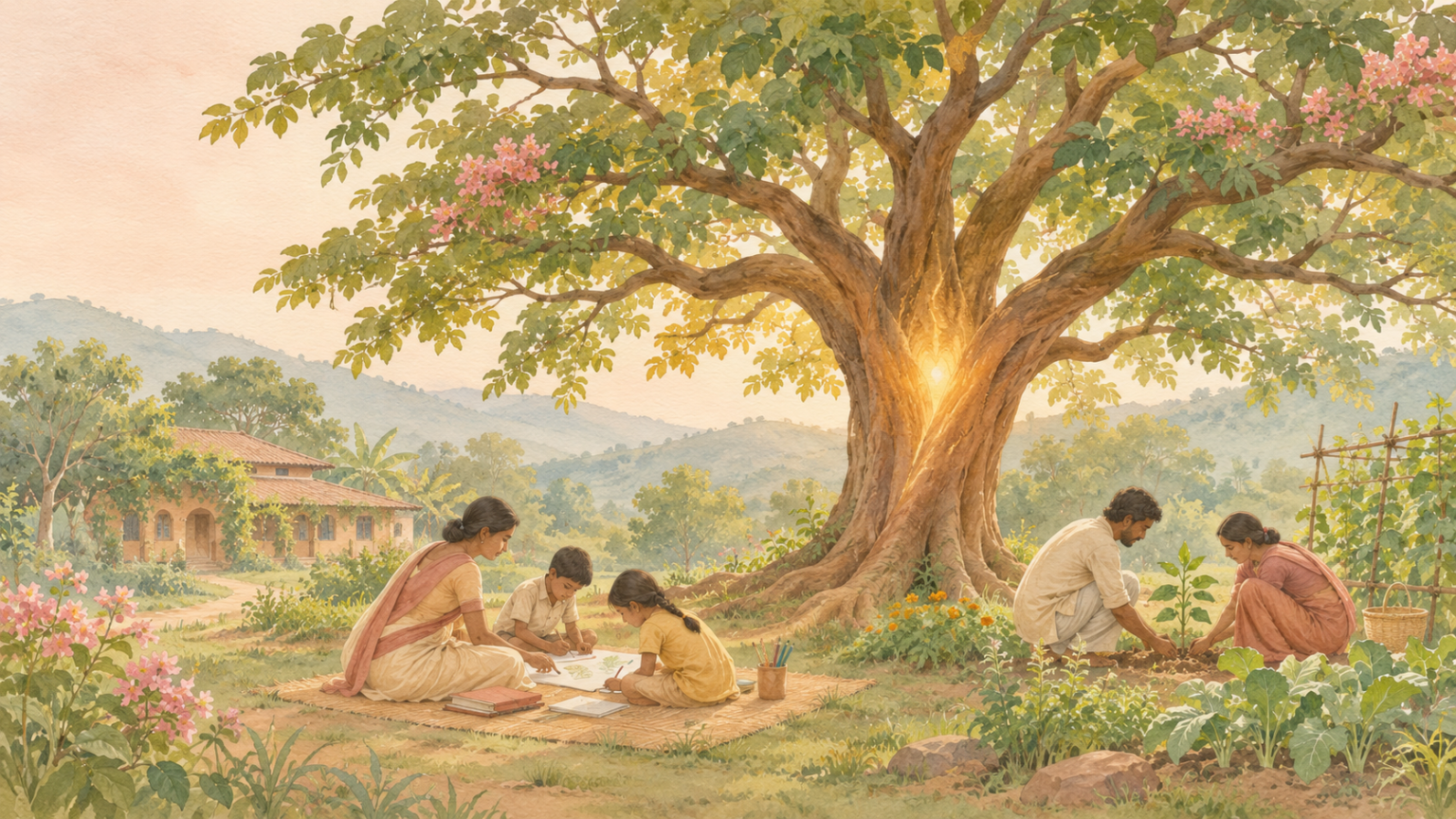
What does it mean to truly develop – as human beings, as a collective, and as a planet? 🌏
We can measure the growth of an economy, count new buildings and celebrate advances in technology. But what do these tell us about the human beings we are becoming, the relationships we are creating and the purposes our societies serve?
True development is the growth of consciousness and its expression in individual and collective life. It gives direction to education, work, economic progress and our relationship with the earth.
In this article 10 sections
- We are spiritual beings seeking conscious expression
- Inner development: peace and progress
- Three movements of true progress
- What does it mean for a collective to develop?
- Soul Culture
- Education for skills, soul and service
- Redefining work
- Giving economic growth a deeper purpose
- Environmental conservation: symptoms, systems and consciousness
- Towards a spiritual age
We are spiritual beings seeking conscious expression
We can begin with our own lives, as individuals. For us, physical health, security, fulfilling relationships and meaningful work all matter for our well-being and happiness. Yet even when our personal and professional lives seem successful, we can still feel empty within. That raises a deeper question: what in us remains unfulfilled?
We have become too accustomed to focusing only on the external. We think of ourselves primarily as bodies and minds, perhaps with a soul. But this is an error. We are fundamentally spiritual beings. The soul is central; mind, emotions, energy and body are its instruments.
This changes the meaning of development. Our journey on earth cannot be only about acquiring material wealth or maintaining an outwardly successful existence. There is a deeper purpose to our lives and to earthly life itself. We seek to develop within because something in us wishes to discover and express the truth of our being. This inner development provides the foundation and direction for outer development.
Inner development: peace and progress
The Mother brings together two dimensions of inner development: peace and progress.
As all spiritual traditions teach us, peace is something we discover within, it is not something attained through outer fulfilment. A persistent source of confusion in our present way of life is that we try to use material means to satisfy psychological and spiritual needs. We seek inward fulfilment through possessions, status and favourable circumstances, and find that we are never really satisfied.
The spiritual traditions point towards a peace and delight deeper than these changing conditions.
From Delight all these beings are born, by Delight they exist and grow, to Delight they return.
– Taittiriya Upanishad, translated by Sri Aurobindo
We can see this most vividly in children. Children do not require a “reason” to be happy. They have a spontaneous joy that comes out, for example when discovering a colour or encountering an ordinary thing for the first time. Such moments suggest there is a happiness that does not depend on acquisition or achievement. They offer an image of the deeper delight that spiritual discovery seeks to uncover.
But peace is only one aspect of the movement. We must also be willing to progress.
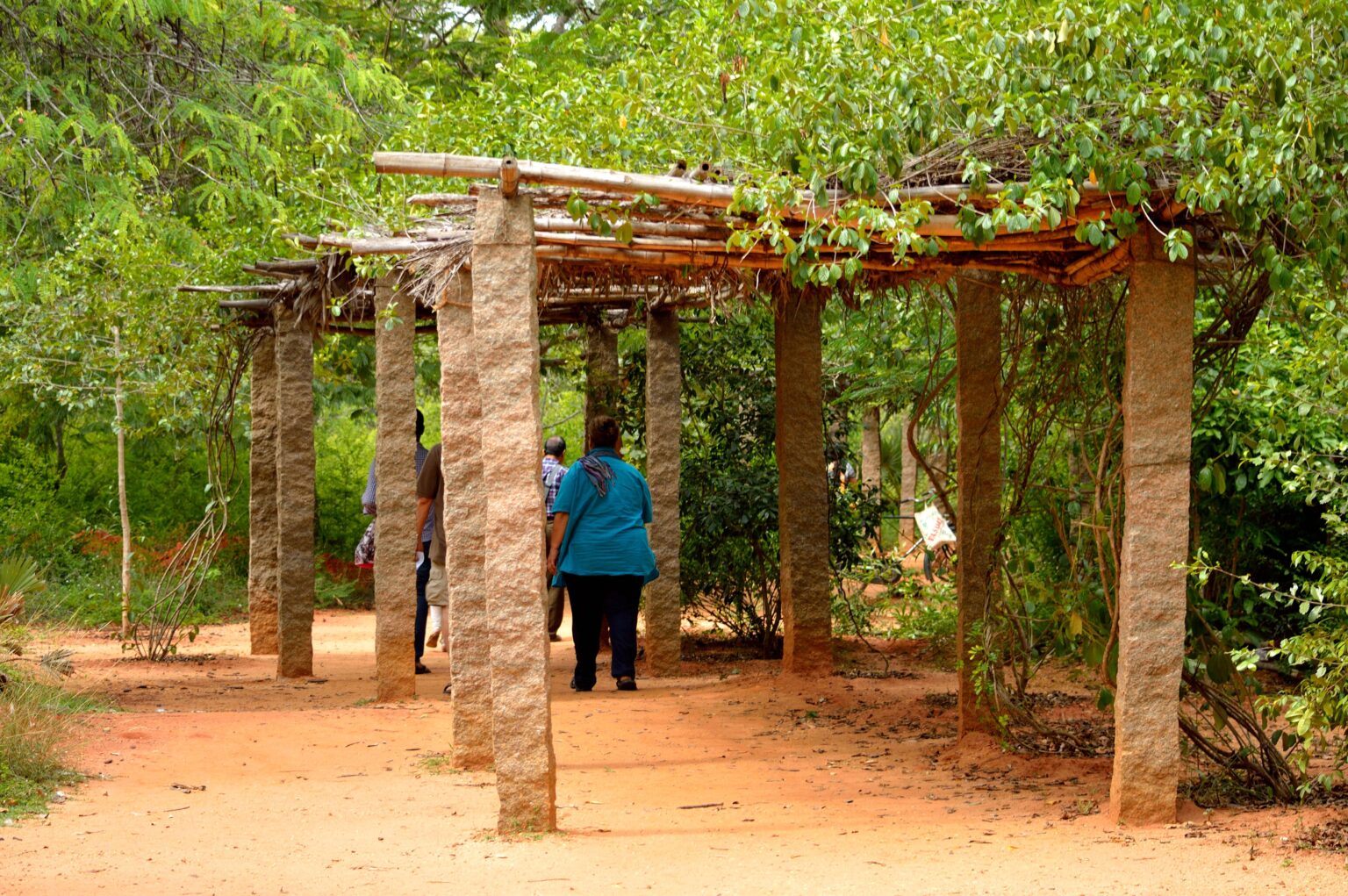
Three movements of true progress
1. Purifying the ego
True progress begins with the purification of the ego. Otherwise, most of the time the ego is busy with superficial worldly concerns: What will I gain? What might I lose? Will I receive pleasure or pain, praise or blame, recognition or a damaged reputation? When we are controlled by the ego, even our efforts towards improvement can remain limited to narrow personal interests.
The conditions in which men live on earth are the result of their state of consciousness. To seek to change these conditions without changing the consciousness is a vain chimera.
— The Mother
Outer systemic change cannot fulfil its transformative promise if those who create and operate the systems remain governed by the same egoistic motives. A change in the structure of society needs a corresponding change in the consciousness acting through it.
2. Discovering who we truly are
The purification of the ego leads us to another quest: the discovery of who I really am. Am I the identity I have formed, the position I occupy, the title I hold or the degree I have earned?
These describe aspects of our outer life. The deeper discovery is of the spiritual being expressing through them.
We are the Divine in expression. Development involves discovering that truth and allowing it to shape our lives.
3. Developing our faculties
Progress also involves the development of our capacities.
The modern education system focuses primarily on academic, mental development. In the name of extracurricular activities, we may also develop a little bit of the body and aspects of our vitality. But a fuller education must reach further.
Can we become emotionally sensitive and empathetic? Can we understand what another person has not put into words? Can we master our energy and direct it towards a higher purpose, beyond our personal ambitions?Can we control and refine our senses and deepen our capacity to appreciate and enjoy life? Without these, our education is incomplete.
When a purified ego, discovery of who one truly is, and the development of our faculties come together in the service of a higher purpose, one begins to truly progress.
What does it mean for a collective to develop?
This was for the individual. What does it mean to develop as a collective?
But what is a collective? Is it merely a group of individuals? Or is there something more?
Just as the soul expresses itself through our individual instruments, a society’s deeper being seeks expression through its collective activities and institutions.
| In the individual | In collective life |
|---|---|
| Mind | Education, organisation |
| Emotions | Family, marriage and community |
| Energy | Entrepreneurship |
| Senses | Art, theatre and food culture |
| Body | Environment and architecture |
| Soul | The deeper values and purpose of a culture |
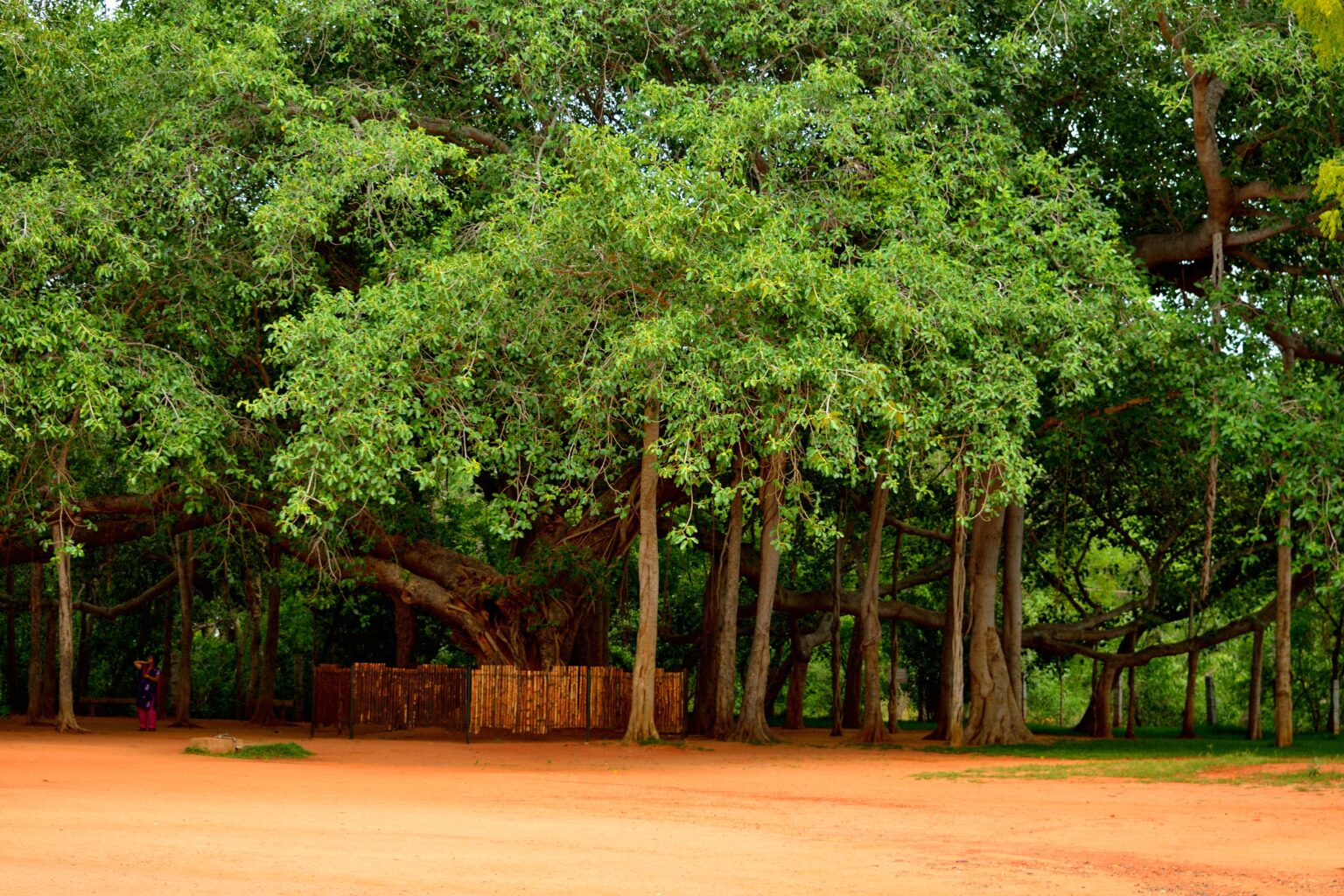
A collective or a nation is more than its political structures, economic activity and infrastructure. It is a soul seeking expression through collective existence.
Without that deeper orientation, each activity can become absorbed in its own outward expansion. Entrepreneurship can turn into earning money simply for the sake of earning more money. The means becomes the goal.
The question is therefore what gives these activities their meaning. What truth, values and purpose are they serving? Their expansion becomes true development when it helps express the deeper being of the collective.
Soul Culture
Each soul culture is a unique expression of the Divine. We see this diversity in dress, food, art and the many forms of collective life.
The uniqueness of a culture extends beyond outward forms. Each has a deeper gift to offer the world. While, for example, the United States carries the drive for enterprise and innovation, India and Bhutan carry the gift of spirituality. That is the true and deep purpose of the existence of these nations. This spiritual gift is increasingly needed today, when humanity faces questions of meaning, fulfilment and its relationship with the earth.
Alongside these distinctive gifts, each culture seeks to realise deeper values that reach beyond their differences. All nations, all societies across the world share an aspiration towards Satyam, Shivam, Sundaram—the true, the good and the beautiful. We can see this aspiration, however imperfectly expressed, in institutions of justice, philanthropy and efforts to alleviate poverty.
Collective development involves uncovering and sharing each culture’s unique gift with the world and bringing these deeper values more fully into life.
Education for skills, soul and service
Education is foundational to cultivating these values.
We can take Auroville as an example. Auroville is an attempt to build a society from a new consciousness. It is an experiment that asks what relationships, education, work, infrastructure and economic life would become if they were organised to express the soul’s values in life.
The Mother’s vision gives us the direction:
In this place, children would be able to grow and develop integrally without losing contact with their souls; education would be given not for passing examinations or obtaining certificates and posts but to enrich existing faculties and bring forth new ones.
— The Mother, “A Dream”
This does not mean that assessment or qualifications are not important. But the problem is when certificates, degrees and positions become the main purpose of education. The same issue is there in business: money or business are not in themselves bad, but the pursuit of money for its own sake is a problem.
Education has a wider task: to help a person discover the soul, develop its instruments and grow in the wish to serve.
Service itself can give us deep fulfilment, through the sense of contributing meaningfully to the collective, of becoming an instrument through which something valuable can be offered.
Education can therefore be understood through three connected aims: skill, soul and service.
Redefining work
A change in education also calls for a change in our understanding of work.
In the present paradigm, education is primarily preparation for the workforce, and work is the price we pay for earning money. We give our time and energy so that, afterwards, we can afford to enjoy life through buying and consuming.
In the Mother’s vision:
…work would not be a way to earn one’s living but a way to express oneself and to develop one’s capacities and possibilities while being of service to the community as a whole, which, for its own part, would provide for each individual’s subsistence and sphere of action.
— The Mother, A Dream
The Mother’s vision brings self-expression and growth together with service, within a collective that provides for people’s subsistence. In this new paradigm, work itself becomes an expression of joy in action. It becomes a field for the flowering of the soul. Its value includes what grows in us and what we contribute through it.
Giving economic growth a deeper purpose
Where does economic development fit into this vision?
There is undoubtedly a role for material advancement, science, technology, efficiency and the growth of our vitality, our powers of action. But the question concerns their purpose. Scientific and technological development are the means. But what is the aim that they lead towards? Material prosperity needs a direction grounded in a fuller understanding of the human being.
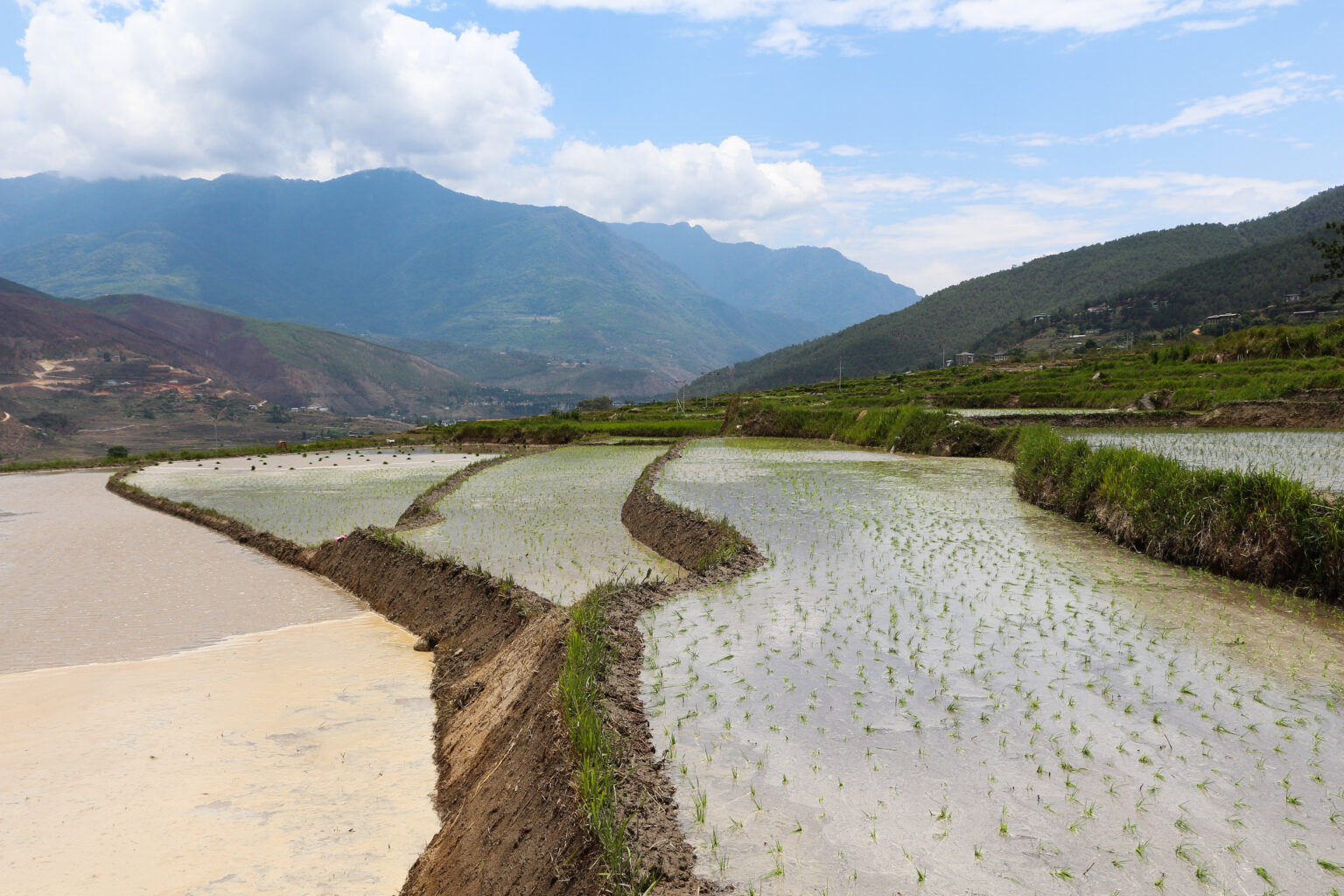
Places like Auroville and Bhutan are establishing a new goal for the means given by economic growth. For this to happen, spirituality must not just be one dimension of development, but the very foundation of it.
Environmental conservation: symptoms, systems and consciousness
A concrete way to look at this is through the lens of environmental conservation.
At one level, we can address visible symptoms: waste, landfills and the need for greening. At another, we can change the systems producing those problems, for instance moving from a linear economy towards a circular one.
But we can go deeper still to the source: the consciousness from which our relationship with nature arises.
When nature is truly felt as our mother, we automatically build everything in resonance with that. A change of consciousness through education is the foundation of the change that we are seeking.
Towards a spiritual age
There are two directions in human development.
One seeks inner truth and enlightenment, but can move towards withdrawal from life. The other pursues increasing mastery over external existence, but often neglects the inner dimension.
We must seek a future in which mastery of life grows through the attainment of inner truth.
India has or rather had the knowledge of the Spirit, but she neglected matter and suffered for it.
The West has the knowledge of matter but rejected the Spirit and suffers badly for it.
An integral education which could, with some variations, be adapted to all the nations of the world, must bring back the legitimate authority of the Spirit over a matter fully developed and utilised.
– The Mother
Spiritual realisation would find expression in the way we educate, work, create institutions, relate to one another and care for the earth. Our outer capacities would become instruments of a deeper consciousness.
True development, in this vision, is the progressive discovery and expression of the spirit in individual and collective life. Its measure includes the human beings we become, the values our societies embody and the contribution we make to the unfolding life of the earth.
Continue exploring: From Livelihood to Worship: How Our Relationship with Work Evolves.
Did this help you?
Share a reflection