
Summary · Spiritual
Stillness
The idea in brief
You were of the way through. Continue reading
On this page
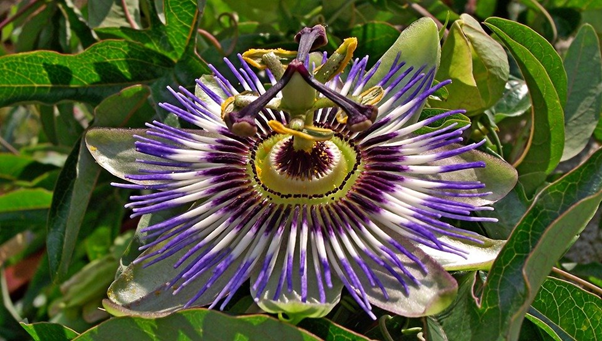
In silence lies the greatest receptivity. And in an immobile silence the vastest action is done. Let us learn to be silent so that the Lord may make use of us. THE MOTHER
What is Stillness?
Stillness, the emptiness of mind and vital and cessation of thoughts and other movements. In this state, the consciousness goes inside in a deep stillness and silence. This condition is favourable to inner experience, realisation, the vision of the unseen truth of things, though one can get these in the waking condition also.1
Everyone has in himself a being which he calls the “Self”, and which is completely silent and immobile. So, if one becomes conscious of this being in himself, one has the experience of the silent Self. It is an immobile and silent being which is within, which is like an aspect of the true being and also an aspect of the witness.2
In the Physical Being
If you remain very quiet, even physically, and when violence is directed at you, you are able to remain very quiet, very silent, very still, well, that has a power not only over you. To remain like a wall, absolutely motionless to wade off attacks.3
In the Mental Being
The normal activity of our minds is for the most part a disordered restlessness, full of waste and rapidly tentative expenditure of energy in which only a little is selected for the workings of the self-mastering will.4Stillness of the mind means, first, the falling to rest of the habitual thought movements, thought formations, thought currents which agitate this mind-substance.5It is the substance of the mental being that is still, so still that nothing disturbs it. If thoughts or activities come, they do not rise at all out of the mind, but they come from outside and cross the mind as a flight of birds crosses the sky in a windless air. It passes, disturbs nothing, leaving no trace.6
A mind that has achieved this calmness can begin to act, even intensely and powerfully, but it will keep its fundamental stillness—originating nothing from itself but receiving from Above and giving it a mental form without adding anything of its own, calmly, dispassionately, though with the joy of the Truth and the happy power and light of its passage.6
In a complete silence only is the Silence heard; in a pure peace only is its Being revealed.7
Why is Stillness Important?
When there is a complete silence in the being, either a stillness of the whole being or a stillness behind unaffected by surface movements, then we can become aware of a Self, a spiritual substance of our being, an existence exceeding even the soul individuality, spreading itself into universality, surpassing all dependence on any natural form or action, extending itself upward into a transcendence of which the limits are not visible. It is these liberations of the spiritual part in us which are the decisive steps of the spiritual evolution in Nature.8
Peace and stillness are the great remedy for disease.9
Only when the mind is thus entirely still, like clear, motionless and level water, in a perfect purity and peace of the whole being and the soul transcends thought, can the Self which exceeds and originates all activities and becomings, the Silence from which all words are born, the Absolute of which all relativities are partial reflections manifest itself in the pure essence of our being.7
How to Practice Stillness?
A constant aspiration for that [to be constantly governed by the Divine] is the first thing—next a sort of stillness within and a drawing back from the outward action into the stillness and a sort of listening expectancy, not for a sound but for the spiritual feeling or direction of the consciousness that comes through the psychic.10
An uncompromising abolition of the ego-sense at its very basis and source. This, if persistently done, changes in the end the mental outlook on oneself and the whole world and there is a kind of mental realisation; but afterwards by degrees or perhaps rapidly and imperatively and almost at the beginning the mental realisation deepens into spiritual experience—a realisation in the very substance of our being. More and more frequent conditions come of something indefinable and illimitable, a peace, a silence, a joy, a bliss beyond expression, a sense of absolute impersonal Power, a pure existence, a pure consciousness, an all-pervading Presence.11
Stillness in Yoga
There are two movements that are necessary—one is the ascent through the increasing of peace and silence to its source above the mind,—that is indicated by the tendency of the consciousness to rise out of the body to the top of the head and above where it is easy to realise the Self in all its stillness and liberation and wideness and to open to the other powers of the Higher Consciousness. The other is the descent of the peace, silence, the spiritual freedom and wideness and the powers of the higher consciousness as they develop into the lower down to the most physical and even the subconscient.12
A deep, intense or massive substance of peace and stillness is very commonly the first of its powers that descends and many experience it in that way. At first it comes and stays only during meditation or, without the sense of physical inertness or immobility, a little while longer and afterwards is lost; but if the sadhana follows its normal course, it comes more and more, lasting longer, and in the end an enduring deep peace and inner stillness and release becomes a normal character of the consciousness, the foundation indeed of a new consciousness, calm and liberated.13
Content curated by Padmarani
Go deeper with this topic
Sources
- CWSA 30 · Inner Experiences in the State of Samadhi · para 2 ↩
- CWM 6 · 13 October 1954 · para 13 ↩
- CWM 8 · 22 February 1956 · para 9, 10, 11, 12 ↩
- CWSA 23 · Hathayoga · para 6 ↩
- CWSA 28 · Philosophical Thought and Yoga · para 17 ↩
- Agenda 3 · July 25 1962 · para 115 ↩ ↩
- CWSA 23 · The Purified Understanding · para 15 ↩ ↩
- CWSA 22 · The Evolution of the Spiritual Man · para 6 ↩
- CWM 15 · Peace and Quiet Faith and Surrender · para 27 ↩
- CWSA 29 · Becoming Conscious in Work · para 36 ↩
- CWSA 23 · The Release From the Ego · para 8 ↩
- CWSA 30 · Ascent and Descent · para 16 ↩
- CWSA 30 · Descent and Other Kinds of Experience · para 7 ↩